Welcome to the world of
Marina Sea Salt
We sell and Distribute across Southern Africa.
Marina Sea Salt is based in Nelson Mandela Bay in the Eastern Cape of South Africa. This sun soaked Eastern Cape coastal land with its year-long mild winds creates the ideal climate for growing excellent quality salt.
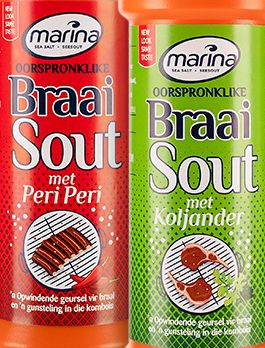
Marina Sea Salt is proudly home to South Africa's best loved Braai Salt founded in 1979. We sell a wide range of salt products which covers all salt requirements.

Industries We Serve

Food Manufacturing

Agriculture

Food Service

Wholesale & Distribution

Retail

The Hidden Epidemic:
Is an Iodine Deficiency Silently Robbing Your Health?
"You may think that since iodine is in most table salt these days that iodine deficiency is a thing of the past. You may have even been told by your doctor not to worry about your iodine levels. But nothing could be further from the truth..."

The Original Braai Salt
South africa's favourite
If it isn't in an orange bottle then it isn't Marina Braai Salt.
Dont let the "Oom Gert" next door help you right.
*voted south africa's favourite by our consumers
We have an extensive distribution network across South Africa.
Strategically
based in the Eastern part of South Africa.
Family run
business since 1979
65%
Proudly black owned
Brands we Serve


Contact Details:
Tel: (+27) 41 463-1205
E-mail: sales@salt.co.za
Office information:
Office Address:
94A Heugh Road, Walmer, Port Elizabeth, 6070
Collections Address:
Kohler Road, Swartkops, Port Elizabeth, 6209